
Your guided route step by step
If it’s your first time using mud masks, follow these steps to get perfect results.
A hair mud is a mixture of powdered Ayurvedic plants used to naturally care for, treat, or color the hair. It is prepared by mixing it with water to form a paste and applied as a mask.
There are two main types:
Coloring muds: These are mixtures of plants that can provide natural pigment. They can cover gray hair, tone down shades, or add color (blonde, brown, coppery, cool brown, black, etc.) while caring for the hair.
Colorless or treatment muds: These are not intended to dye the hair, but rather to improve its health. Plants such as bhringraj, brahmi, neem, amla, or shikakai are used to strengthen, add shine and volume, balance the scalp, and improve the overall condition of the hair.
And what is the difference between a hair mud and henna? Henna is just one plant (Lawsonia inermis) that provides a coppery/orange tint. In contrast, a hair mud is usually a mixture of several plants (henna, indigo, cassia, and other Ayurvedic herbs) formulated to achieve different shades and more personalized results. In other words: henna is an ingredient; the hair mud is the complete formula.
Furthermore, unlike chemical dyes, hair muds do not damage the hair fiber or aggressively alter the hair. While providing color or treatment, they help strengthen, add shine and body, and leave the hair feeling healthier and better cared for.
Unlike chemical dye, with henna bars it is not enough to choose a color. The shade you need and the number of steps will also depend on how much gray hair you have.
If you are blonde, it is quite simple. The coloring is usually done in a single step and you can choose from different shades depending on the result you are looking for: Beige Henna for a cooler or platinum blonde, Blonde Henna for a golden blonde, and Caramel Henna for a warmer honey blonde.
If you are brunette, in addition to the shade, it is important to consider your percentage of gray hair.
● Less than 30% gray hair: normally a single step is enough to achieve natural coverage.
● More than 30% gray hair: we recommend doing a double step. First, the gray hair is pigmented with a base shade and then the second shade is applied. This process allows you to achieve better coverage and longer-lasting color, especially in dark shades.
Don't worry if all this seems complicated at first. Here we leave you a quick guide that will help you choose the shade and the number of steps you need.
And if you still have doubts, we have prepared a small test to help you find your ideal color. In addition, you can always write to us on WhatsApp and we will be delighted to help you.


𝟏. 𝐖𝐚𝐬𝐡 𝐲𝐨𝐮𝐫 𝐡𝐚𝐢𝐫 𝐛𝐞𝐟𝐨𝐫𝐞 𝐚𝐩𝐩𝐥𝐲𝐢𝐧𝐠. Your hair must be clean and free of oils, silicones, or styling products so that the plants can properly adhere to the hair fibers.

𝟐. 𝐏𝐫𝐞𝐩𝐚𝐫𝐞 𝐭𝐡𝐞 𝐦𝐢𝐱𝐭𝐮𝐫𝐞. Add 3 times as much water (at the temperature indicated on the box) as plant powder and mix until you achieve a creamy texture, similar to yogurt

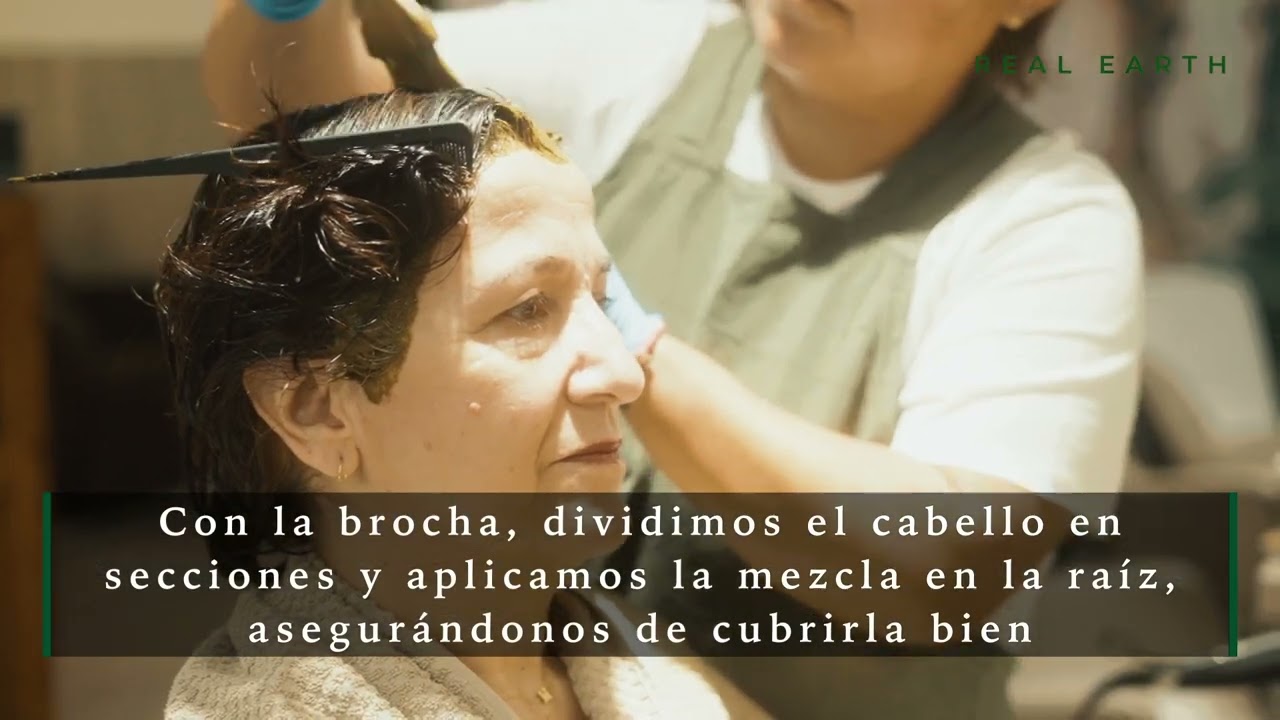
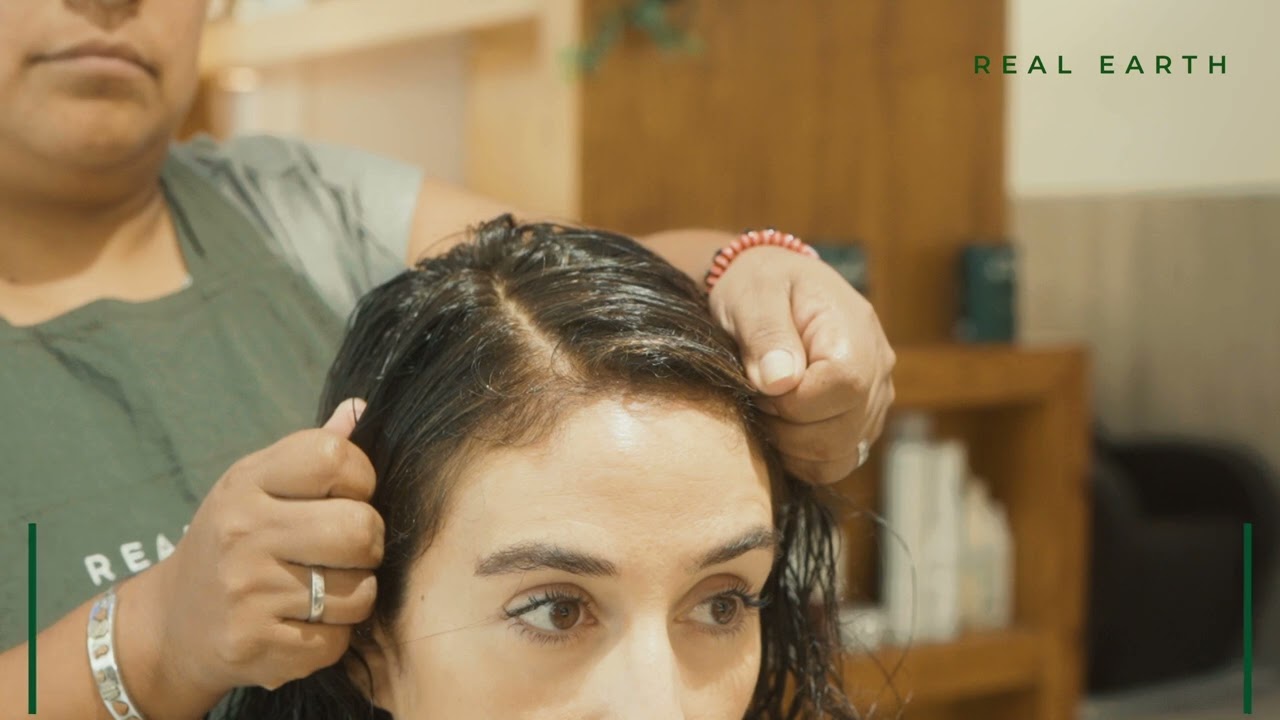
𝟑. 𝐀𝐩𝐩𝐥𝐲 𝐭𝐨 𝐭𝐡𝐞 𝐡𝐚𝐢𝐫. Use gloves and a brush to distribute the mixture evenly from roots to ends, paying special attention to the crown areas.

𝟒. 𝐂𝐨𝐯𝐞𝐫 𝐚𝐧𝐝 𝐥𝐞𝐭 𝐢𝐭 𝐰𝐨𝐫𝐤. Gather your hair and cover it with plastic wrap or a shower cap to retain moisture and heat. Leave it on for the recommended time depending on the shade and desired result.

𝟓. 𝐑𝐢𝐧𝐬𝐞 𝐭𝐡𝐨𝐫𝐨𝐮𝐠𝐡𝐥𝐲 𝐰𝐢𝐭𝐡 𝐰𝐚𝐭𝐞𝐫. Remove all product using only conditioner water until the water runs completely clear.

𝟔. 𝐋𝐞𝐭 𝐭𝐡𝐞 𝐜𝐨𝐥𝐨𝐫 𝐬𝐞𝐭𝐭𝐥𝐞. Wait between 24 and 48 hours before washing your hair with shampoo
To prolong the color and keep your hair healthy, we recommend always using a sulfate-free shampoo and a silicone-free conditioner. Why?
Sulfate-free shampoo - Cleanses gently without stripping away the plant-based pigments, helping the color last longer.
Silicone-free conditioner - Nourishes and softens without creating an artificial film that could interfere with future plant applications.
There is no single routine that works for everyone. Every person's hair has different needs depending on its hydration level, oil production, texture, treatment history, and personal goals. That is why, just as we customize our plant blends, we also recommend adapting aftercare to each hair type.
Below you will find our recommendations based on the most common needs.
Don't worry. We know that at first you may have many questions about which shade to choose or what products you need to care for your hair afterwards.
That's why we have prepared a selection of packs with our most popular combinations, designed to help you achieve the best results from the first application and make the transition to plant-based color much easier.
And if you prefer to explore other shades or create your own personalized routine, you can find our entire range of plant-based colors and hair treatments here
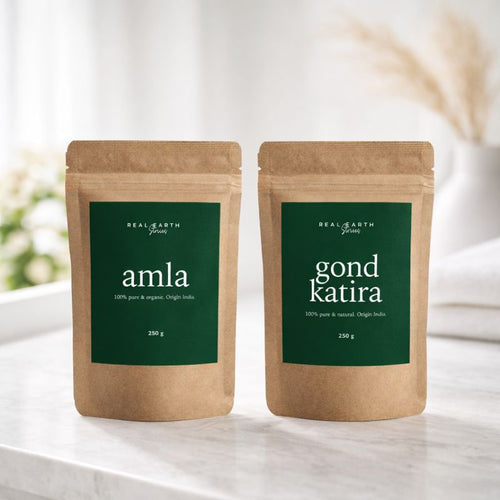
Frizzy Hair Kit
€35,70
Ver producto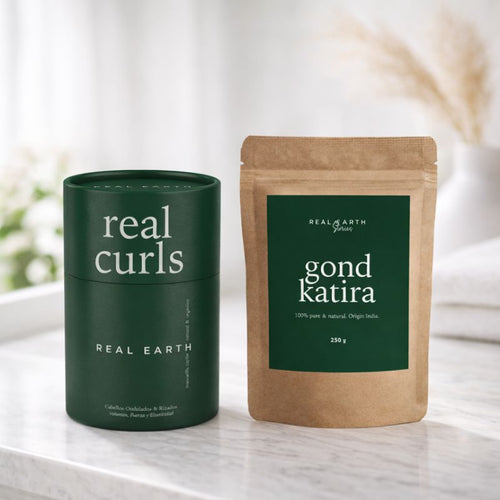
Pack Brings Curls Back to Life
€32,80
Ver producto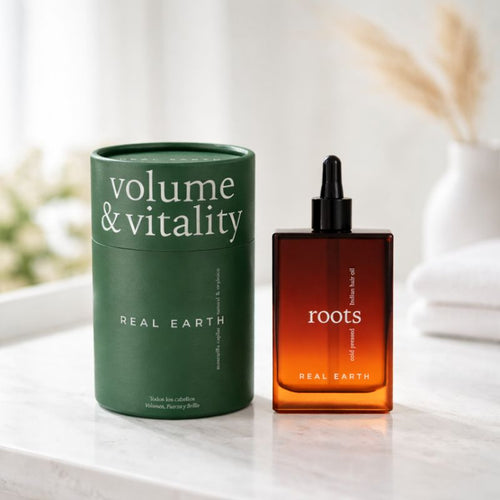
Hair Strengthening Pack
€38,70
Ver producto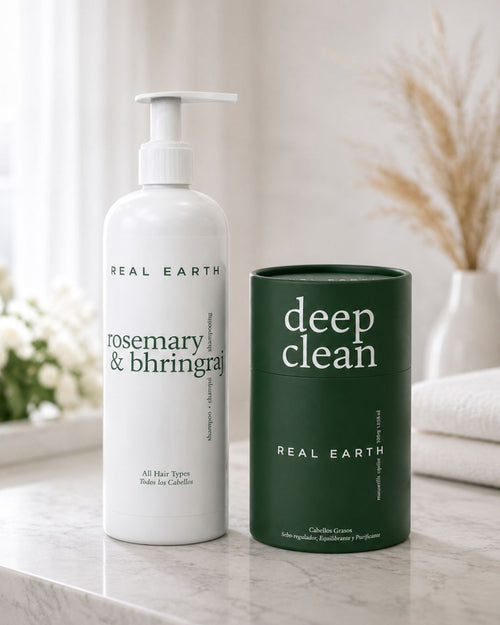
Clean Root Pack
€38,90
Ver producto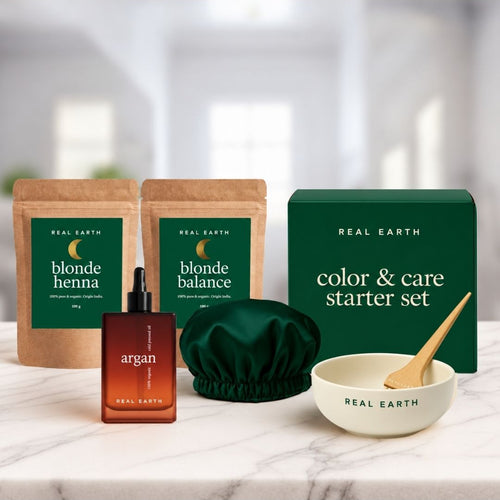
Golden Aura Ritual (Luminous Blonde)
€67,00
Ver producto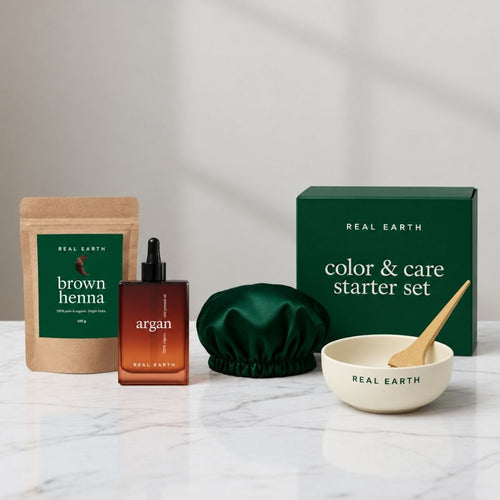
Authentic Essence Ritual (Natural Chestnut)
€57,00
Ver producto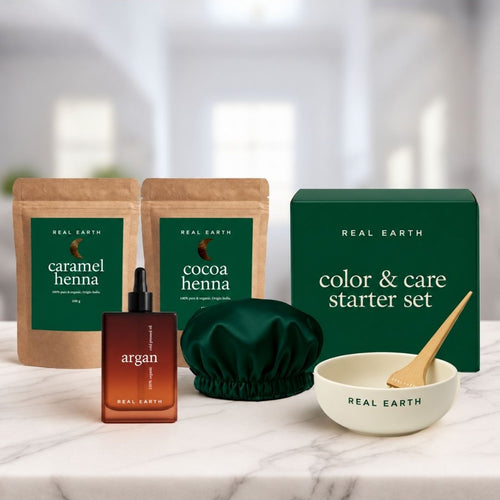
Honey Sun Ritual (Light Chestnut / Honey Blonde)
€67,00
Ver producto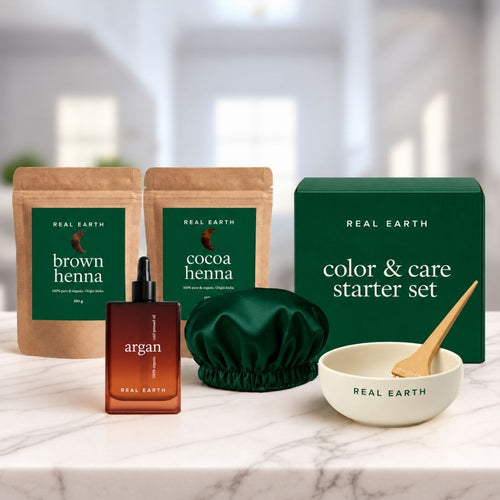
Deep Earth Ritual (Intense Chestnut)
€67,00
Ver productoMaster Coloration
Follow our chapters and get the perfect color step by step.
Chapter 1: Golden Blonde

Chapter 2: Honey Blonde

Chapter 3: Light Brown
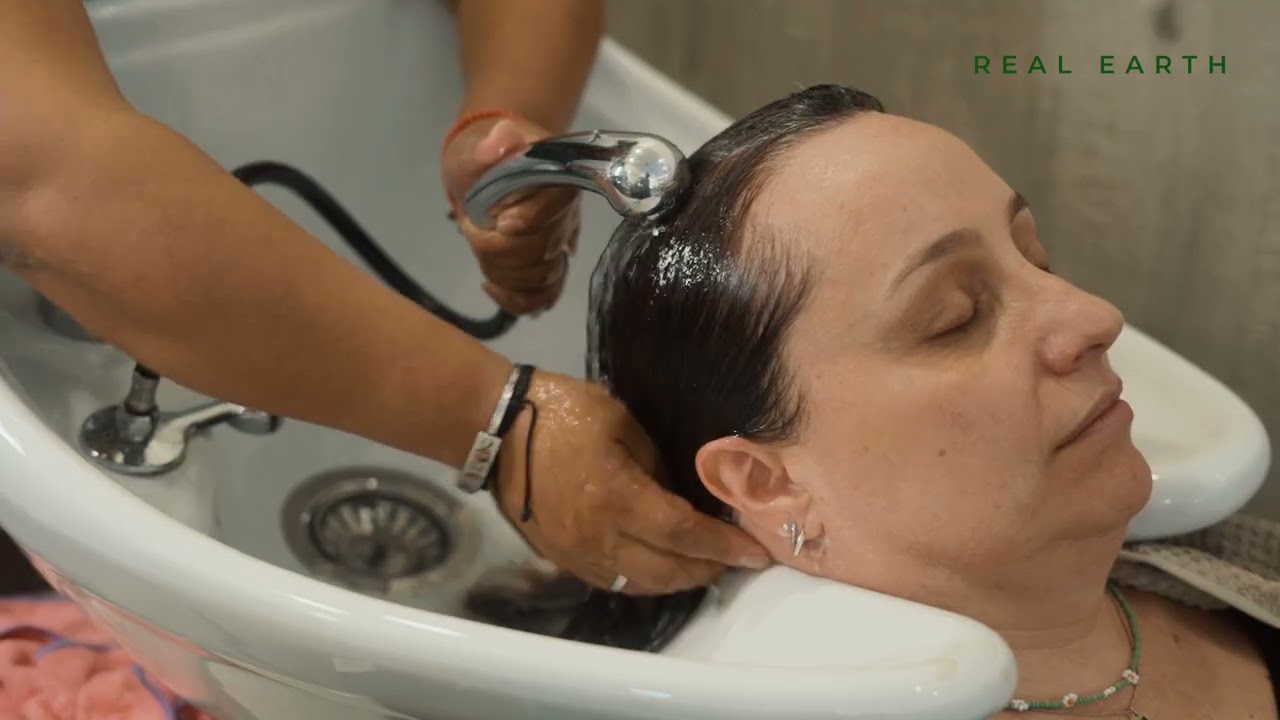
Chapter 4: Medium Brown
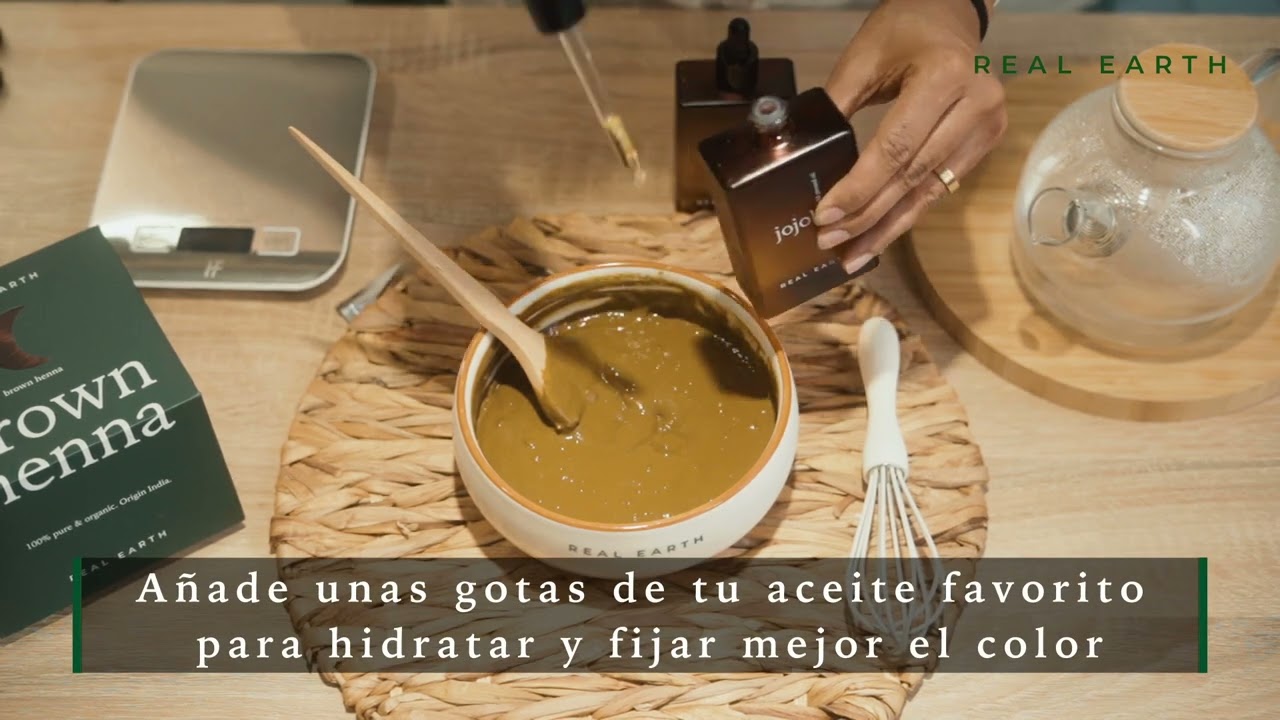
Chapter 5: Hazelnut
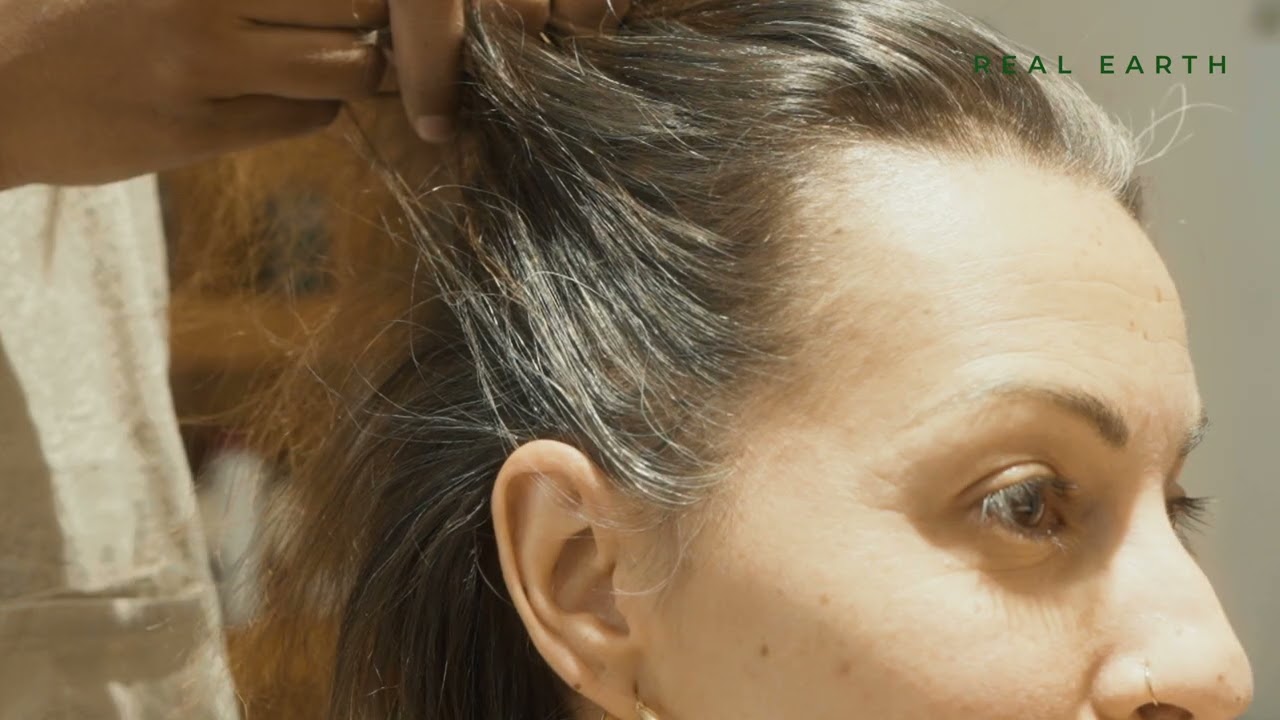
Chapter 6: Medium Golden Brown
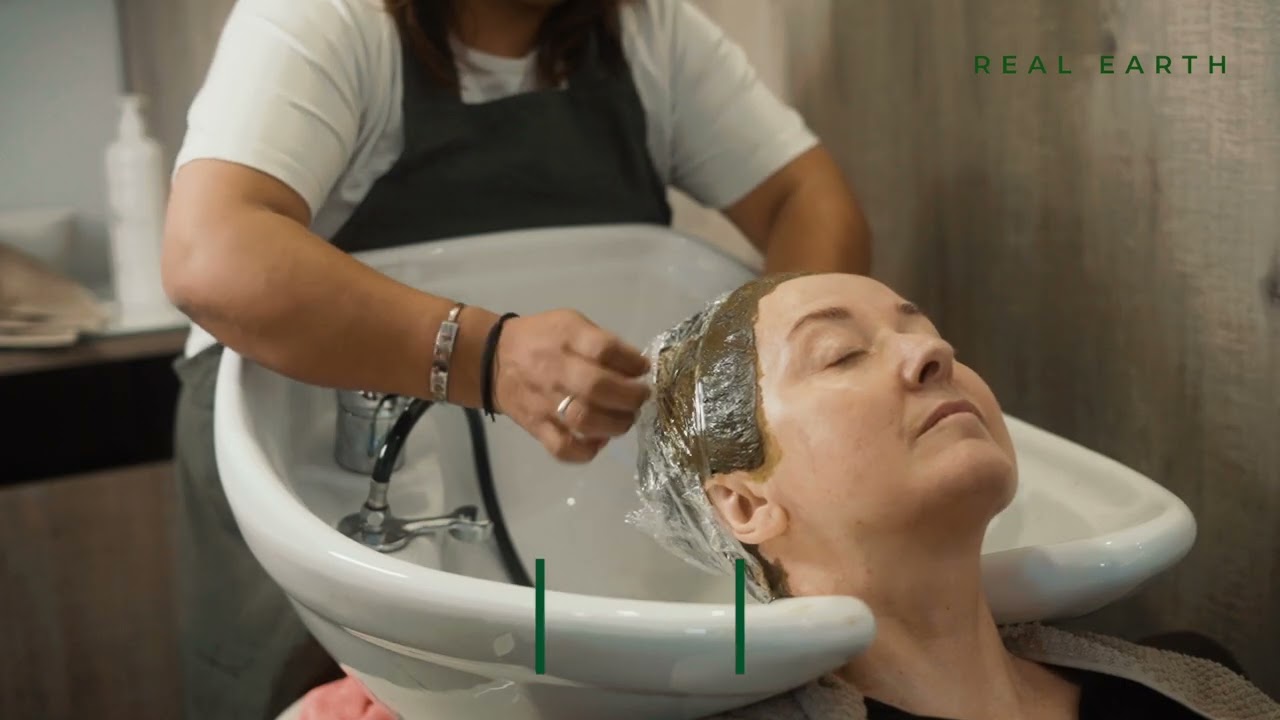
Chapter 7: Medium Neutral Brown
Chapter 8: Medium Chocolate Brown
Chapter 9: Warm Dark Brown
Chapter 10: Cool Dark Brown
Do you need help?
We are here for help you
Choose your preferred channel, and we’ll get back to you quickly.
Real Earth Academy
Learn to master coloring with muds
Guides, videos, real stories, and solutions for choosing a color, covering gray hair, and caring for your hair.
Accesos rápidos
Explore by Topic

Start here
Everything you need to know to get started

Color Guide
Choose the perfect shade for you

Grey hair
Natural, long-lasting coverage

Troubleshooting
Resolve questions and correct results

Videos & tutorials
Learn with our step-by-step videos

Ayurvedic ingredients
Discover the plants that transform your hair

Real stories
Real results from real clients

Gift Guide
Give the gift of nature and care

Rituals & Wellness
Take care of yourself from the inside out